“
Die Innovation von CONTROL: Unsicherheiten im gesamten System früh erkennen, bewerten und aktiv beherrschen. So reagiert das Fahrzeug adaptiv – durch Tempoanpassung oder Ausweichen – und bleibt in komplexen Umgebungen sicher. CONTROL ergänzt bewährte Ansätze um skalierbare Metriken, digitale Zwillinge und Unsicherheitsmodelle, erprobt in Simulation, Prüfstand und realen Demonstratoren – ein Kernbaustein für das softwaredefinierte Fahrzeug (SDV).

Marc Zeller
Siemens Mobility GmbH
RESEARCH APPROACH
Detecting, assessing, and managing uncertainties.
CONTROL lays the foundation for safe highly automated driving in the open world.
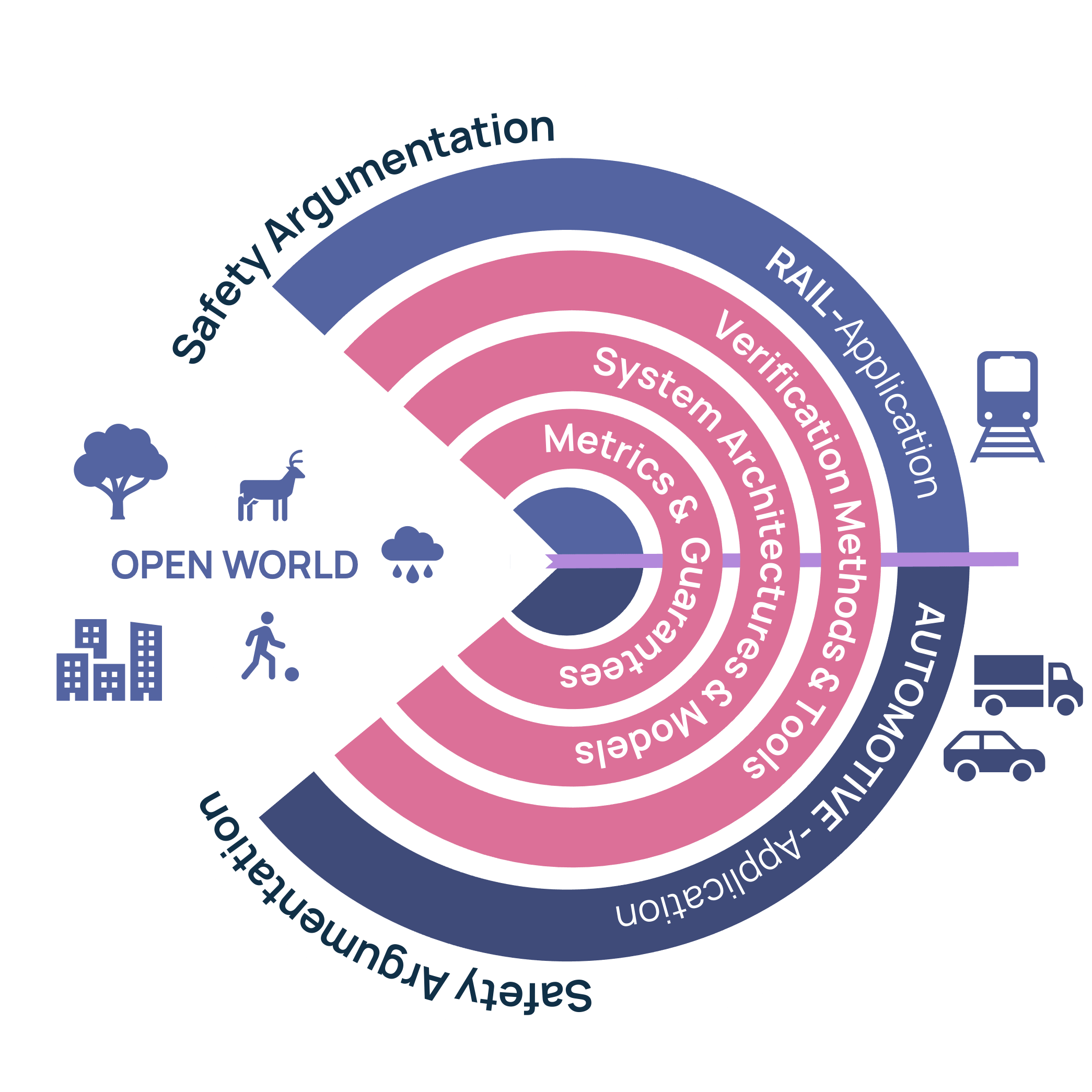
► The diversity and dynamics of open environments overwhelm classical validation methods. CONTROL therefore takes a new approach: the system continuously evaluates how safely it can operate in a given situation and responds to uncertainties with precautionary actions, such as adjusted speed or controlled evasive manoeuvres.
► CONTROL builds on the PEGASUS and VVMethods projects, which systematically derived test cases and validated complex operational domains. As part of the VDA Leitinitiative autonomous and connected driving, CONTROL extends this trajectory by adding the ability to actively assess and handle uncertainties.
► Instead of considering individual components in isolation, the highly automated vehicle is understood as a holistic system, including adaptive methods for evaluating uncertainties during development and at runtime. A central element is the development of a cross‑industry safety argumentation framework that systematically identifies, assesses, and integrates uncertainties into the architecture of highly automated systems.
► CONTROL will become a key building block for the software‑defined vehicle (SDV) and establishes the foundation for faster development cycles, updates, and increased innovation speed. The developed metrics, models, and tools are scalable, cross‑domain, and ready for industrial implementation, with direct relevance for road, rail, and beyond.
RESEARCH APPROACH
Detecting, assessing, and managing uncertainties. CONTROL lays the foundation for safe highly automated driving in the open world.
► The diversity and dynamics of open environments overwhelm classical validation methods. CONTROL therefore takes a new approach: the system continuously evaluates how safely it can operate in a given situation and responds to uncertainties with precautionary actions, such as adjusted speed or controlled evasive manoeuvres.
► CONTROL builds on the PEGASUS and VVMethods projects, which systematically derived test cases and validated complex operational domains. As part of the VDA Leitinitiative autonomous and connected driving, CONTROL extends this trajectory by adding the ability to actively assess and handle uncertainties.
► Instead of considering individual components in isolation, the highly automated vehicle is understood as a holistic system, including adaptive methods for evaluating uncertainties during development and at runtime. A central element is the development of a cross‑industry safety argumentation framework that systematically identifies, assesses, and integrates uncertainties into the architecture of highly automated systems.
►CONTROL will become a key building block for the software‑defined vehicle (SDV) and establishes the foundation for faster development cycles, updates, and increased innovation speed. The developed metrics, models, and tools are scalable, cross‑domain, and ready for industrial implementation, with direct relevance for road, rail, and beyond.
PROJECT CONTEXT
CONTROL is part of the VDA Leitinitiative on autonomous and connected driving. The project builds on methodological work in both the automotive and rail domains, in particular the projects VVMethods and SetLevel of the PEGASUS project family, as well as the safe.trAIn project. Under the leadership of SafeTRANS, a white paper was developed with broad participation from industry and academia, providing essential groundwork for CONTROL. The project is funded by the German Federal Ministry for Economic Affairs and Energy.