
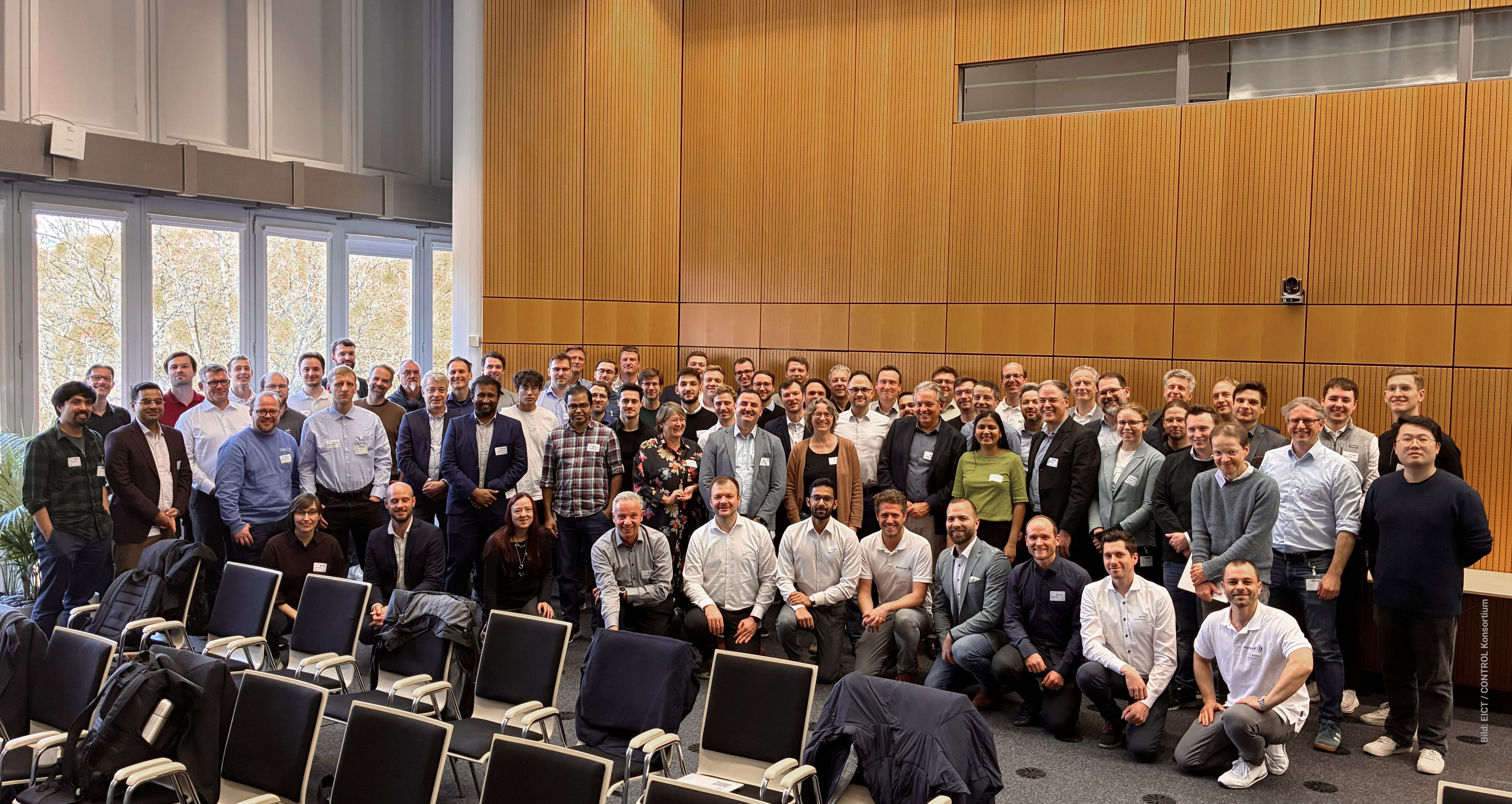
More Safety for Autonomous Driving on Road and Rail
New research project CONTROL launched – How can autonomous cars, trucks, buses, and trains operate safely and reliably when traffic conditions constantly change due to unexpected obstacles or shifting weather? This question is at the core of the research project CONTROL, short for Controlling Risk of Highly Automated Transportation Systems Operating in Complex Open Environments, which started in October.
Autonomous driving is considered a key technology for the future of mobility. It promises greater comfort, higher fleet efficiency, fewer emissions, more sustainable use of resources, and, above all, new mobility opportunities – for example through autonomous people movers as well as driverless trains and trucks.
Today’s automated systems only function under clearly defined environmental conditions. What is missing is the ability to operate safely in open, highly dynamic environments with constantly changing external factors. CONTROL addresses rare scenarios – known as long-tail events – including unexpected obstacles on road and rail, limited visibility, and varying weather and lighting conditions. These rare events have a major impact and are crucial for enabling autonomous driving.
Over the next three years, CONTROL will develop innovative methods for safeguarding autonomous vehicles as part of an integrated, dynamic road-and-rail system. Central to the project is the development of a cross-domain safety argumentation framework that systematically captures, evaluates, manages, and integrates operational uncertainties into the architecture of autonomous systems. Based on this, the system can initiate precautionary actions – such as adjusting speed or performing controlled evasive maneuvers. This approach is complemented by new quality metrics, adaptive sensor fusion, and simulation-based validation. Practical feasibility will be tested in demonstrators provided by the participating partners throughout the project.
With its research focus, the project strengthens the competitiveness of German industry in the field of autonomous mobility. It lays an important foundation for new products and standards – from road to rail and even further applications such as industrial automation and robotics.
Images: EICT for CONTROL Consortium
Images: EICT for CONTROL Consortium